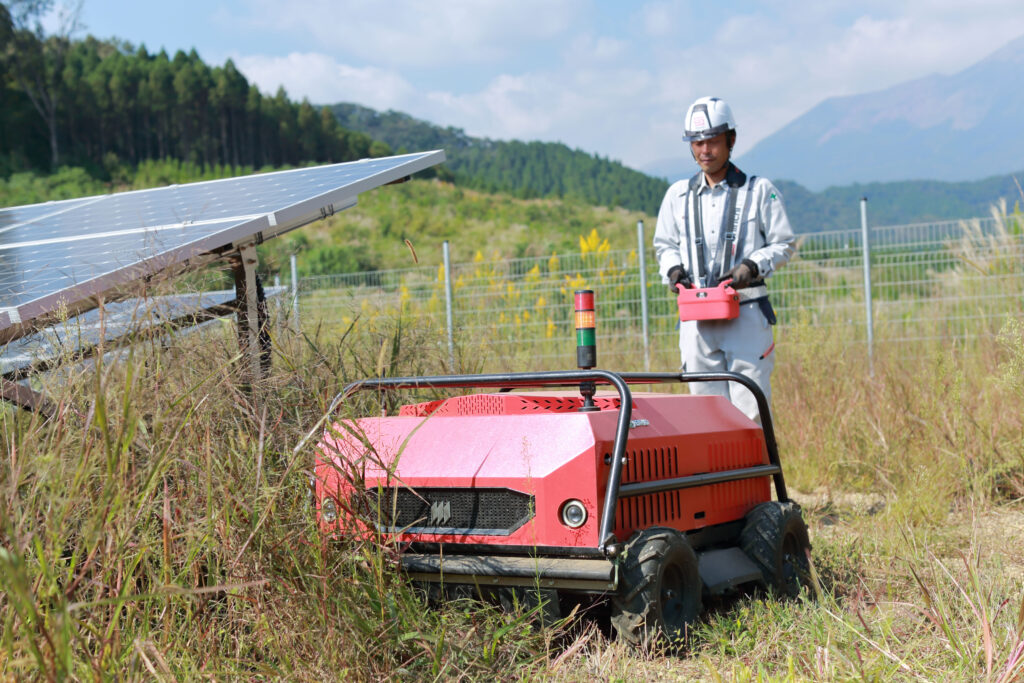
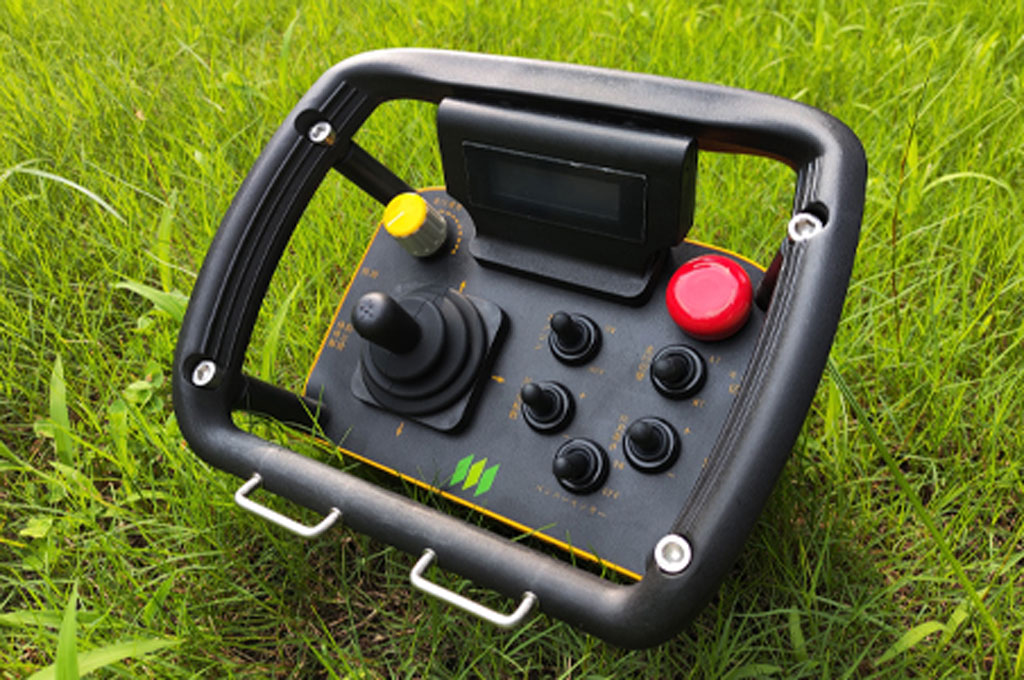
Steep slopes and uneven hillsides add visual appeal to residential and commercial landscapes, but they pose major challenges for traditional lawn mowers. Mowing on sloped terrain requires special equipment designed for stability, traction, and operator safety. Without the right slope mower and proper safety practices, lawn care in these areas can become risky and inefficient.
This guide explains how to choose the best mower for steep slopes and hilly terrain. You’ll learn what features to look for, how to compare top-performing slope mowers, and essential safety tips for achieving efficient and safe mowing on challenging landscapes.
Key Takeaways for Choosing the Best Mower for Hills and Slopes
- Remote-controlled mowers are among the safest choices for hilly terrain. Their distance-operated control, automatic shut-off, and obstacle-detection systems make slope mowing efficient and risk-free.
- Mowing on hills comes with unique challenges such as rollover risks, slips, uneven grass cuts, increased physical strain, and faster wear on equipment.
- Riding mowers work well on gentle or low-grade slopes, while stand-on and zero-turn mowers perform better on moderately steep areas.
- For steeper slopes, self-propelled walk-behind mowers or tracked remote-control mowers offer superior traction, control, and stability.
- When selecting a mower for slopes, evaluate factors like terrain type, lawn size, power source, traction requirements, built-in safety features, and drive system performance.
Key Challenges of Mowing on Slopes
Mowing lawns on slopes or hilly terrain may seem simple, but it comes with several hidden risks. Using the wrong equipment or technique can make lawn maintenance difficult, uneven, and potentially unsafe. Here are the main challenges:
- Limited Traction
Sloped surfaces are prone to slipping, and traditional lawn mowers may lose stability easily. Wet or muddy conditions increase the risk of sliding or tipping. - Uneven Weight Distribution
On uphill or downhill mowing, an unstable center of gravity can cause the mower to tip over, risking both the operator and equipment. - Poor Grip
Tire patterns and pressure significantly affect traction. Wet soil can be slippery, and dry soil can be too hard, both reducing stability. - Safety Risks
Steep slopes increase the chance of falls or mower rollovers, posing dangers to operators and the mower itself. - Faster Equipment Wear
Operating on slopes puts extra strain on engines, blades, and drive systems, causing faster wear compared to flat-ground mowing. - Uneven Cutting
Hilly terrain can lead to inconsistent mowing depth, affecting the overall appearance of your lawn. - Higher Physical Demand
Pushing a manual mower on slopes requires significant effort, and prolonged mowing can quickly lead to operator fatigue.
This is where a Remote Control Lawn Mower shines. With remote operation, you can mow steep or uneven terrain from a safe distance, maintaining stable traction and efficiency. Remote control mowers make hillside lawn maintenance safer, easier, and more effective, while delivering a clean, uniform cut even in challenging landscapes.
Which Type of Lawn Mower is Best for Slopes and Hills?
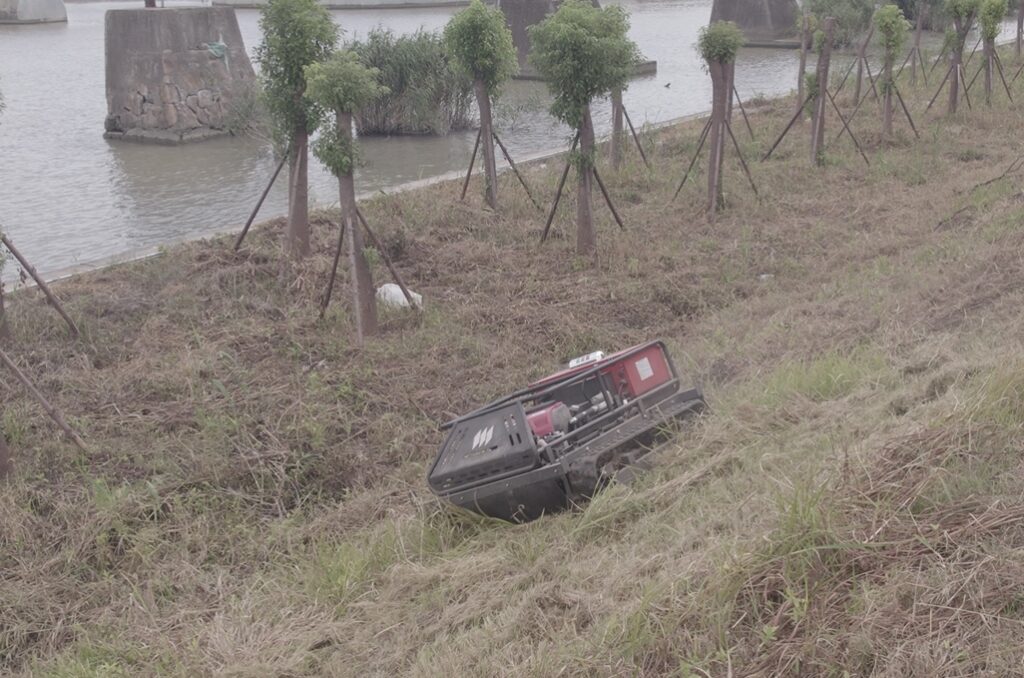
Mowing on hills or steep slopes comes with unique challenges, such as loss of traction, uneven ground, risk of tipping, and uneven cuts. Choosing the right type of mower can greatly improve efficiency and safety. For slopes and hills, there are two main types of mowers to consider: track (crawler) mowers and wheel mowers.
Advantages of Track Mowers
- High Traction and Stability
The tracked design provides superior grip, making it ideal for wet, steep, or uneven terrain. This reduces the risk of slipping or tipping over during slope mowing. - Low Ground Pressure
Tracks distribute weight more evenly, preventing deep ruts on soft or sensitive soil. This is especially useful for protecting turf and maintaining soil integrity. - Smooth and Comfortable Ride
Advanced suspension systems help bridge gaps and uneven surfaces, offering a stable ride for operators even on rugged terrain. - Adaptability to Complex Terrain
Track mowers perform well on hilly landscapes, orchards, and slopes, allowing continuous, safe mowing across obstacles and irregular surfaces.
Advantages of Wheel Mowers
- Enhanced Safety on Slopes
High-wheel mowers provide stability on steep inclines, allowing operators to navigate hills with reduced slip risk. - Reduced Effort and Resistance
With attachments like grass bags, high-wheel designs minimize drag, making the mower easier to operate while reducing wear on the machine. - High Operational Efficiency
Lighter wheel mowers are easy to maneuver, ideal for quick turns and fast movement, particularly on moderate slopes or flat areas.
How to Choose the Right Lawn Mower?
- Assess Terrain: For steep or rugged landscapes, a track mower offers superior traction and stability. For flatter areas or gentle slopes, a wheel mower is faster and more efficient.
- Consider Work Area Size: Large, flat lawns are suited for wheel mowers; complex or hilly terrain benefits more from track mowers.
- Budget Considerations: Track mowers are generally more expensive but provide better safety and performance on challenging terrain.
- Smart Features: If automation or smart navigation is needed, compare track and wheel mowers with remote control and intelligent features to meet your requirements.
Essential Safety Tips for Mowing Hills and Slopes
Mowing on slopes and uneven terrain can be risky if proper safety measures aren’t followed. No matter what type of mower you use—whether a remote-controlled, walk-behind, or riding mower—prioritize safety with these key tips:
- Avoid mowing on unsafe ground conditions – Do not mow when the grass is too wet, muddy, or extremely dry, as this increases the risk of slips and uneven cuts.
- Use all protective features – Fasten seatbelts on riding mowers and make full use of built-in safety mechanisms.
- Wear personal protective equipment – Always wear safety glasses, ear protection, gloves, and sturdy footwear to shield against flying debris.
- Perform a pre-mowing check – Inspect your mower for maintenance issues and ensure it’s in good working order before starting.
- Maintain regular mowing – Prevent grass and weeds from growing too tall, which can make slope mowing more dangerous.
- Control your speed – Reduce speed when moving on inclines to maintain stability and traction.
- Dress appropriately – Wear clothing that protects from clippings and sharp debris.
- Mow in the recommended direction – Follow manufacturer guidelines for mowing up or down slopes, depending on your mower type.
- Avoid sudden movements – Sharp turns or abrupt stops can increase the risk of rollovers.
- Check brakes before starting on a slope – Ensure brakes are fully functional to maintain control when ascending or descending hills.
- Stay clear of drop-offs and edges – Never mow near steep declines or areas where the mower could tip.
- Clear obstacles beforehand – Remove rocks, branches, and other debris to prevent accidents.
- Start and stop safely – Avoid starting or stopping the mower while on an incline; do so on level ground whenever possible.
By following these safety tips for mowing hills and slopes, you can reduce the risk of accidents and maintain a healthy, evenly cut lawn, even on challenging terrain.
Mountain Remote-Controlled Lawn Mower FAQs
1. How should I mow around trees or rocks on a hillside?
For hilly or mountainous terrain with obstacles, it is recommended to use a high-traction remote-controlled or ride-on mower. Zero-turn mowers are especially useful due to their excellent maneuverability, allowing you to easily navigate around trees, rocks, and other obstacles while maintaining safe and efficient mowing.
2. Can a mountain remote-controlled mower be used safely on steep slopes?
Modern mountain remote-controlled mowers are designed with a low center of gravity and anti-slip tracks or tires, providing stability on steep slopes. However, it is important to reduce speed and choose the proper mowing direction to ensure safety.
3. Is it safe to operate a remote-controlled mower on wet or muddy mountain terrain?
Mowing on wet or muddy ground carries a risk of slipping. It is recommended to mow when the ground is dry or slightly damp, and to check the mower’s traction and tire pressure to ensure sufficient grip.
4. How can I prevent the mower from tipping over on a slope?
Choose a low-center-of-gravity mower with wide tracks or high-traction tires. Avoid sharp turns or sudden acceleration and follow slope mowing safety guidelines.
5. Does maintaining a mountain remote-controlled mower differ from a flat-ground mower?
Yes. Mowing on slopes and uneven terrain puts more stress on the engine, blades, and tracks/tires. Regular inspections, clearing obstacles, and adjusting tire pressure help extend the mower’s lifespan and ensure safe operation.
6. What slope angles are suitable for mountain remote-controlled mowers?
The maximum slope capacity varies by model. High-performance mountain remote-controlled mowers can typically handle slopes of 30°–50°. Always confirm the mower’s maximum safe slope and choose the appropriate model for your terrain.
Discover the Best BotusMov Commercial Mowers for Hills
Choosing the right mower is key to safe and efficient operations, especially on hilly or uneven terrain. BotusMov offers a range of reliable commercial mowers designed to handle slopes with ease and precision.
Our focus on safety, innovation, and performance ensures that every BotusMov riding mower is built to deliver exceptional stability and traction on challenging landscapes. From steep hills to rough terrain, BotusMov mowers are engineered for reliability and long-lasting performance.
Our knowledgeable team provides expert guidance and support to help you select the ideal hillside mower for your specific needs. With BotusMov, you can trust that you’re investing in a high-quality machine from a brand committed to safety, efficiency, and customer satisfaction.