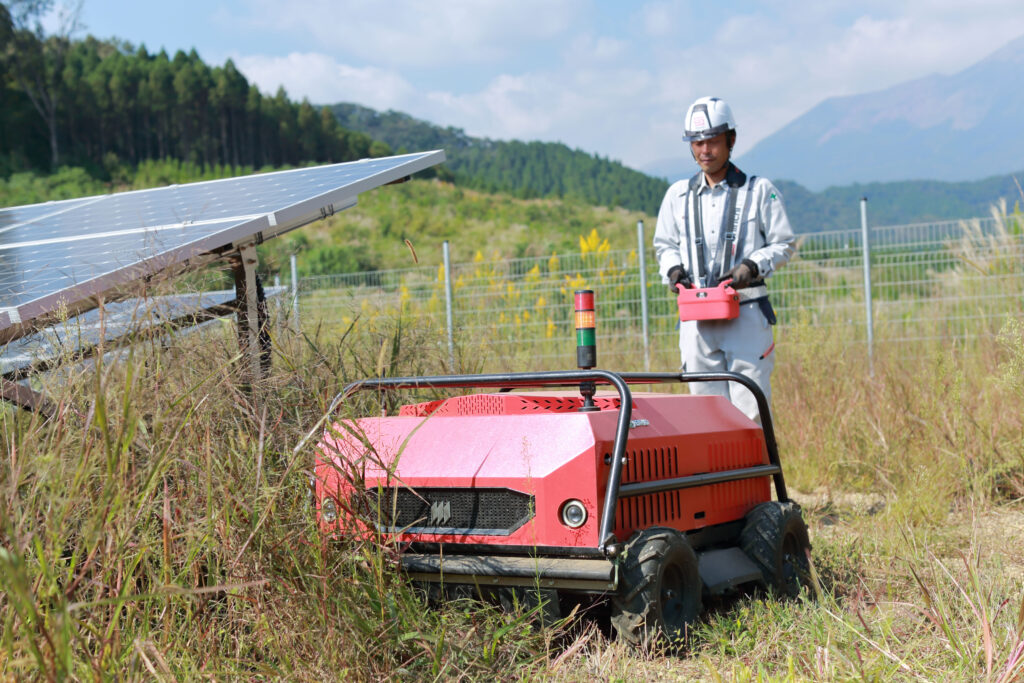
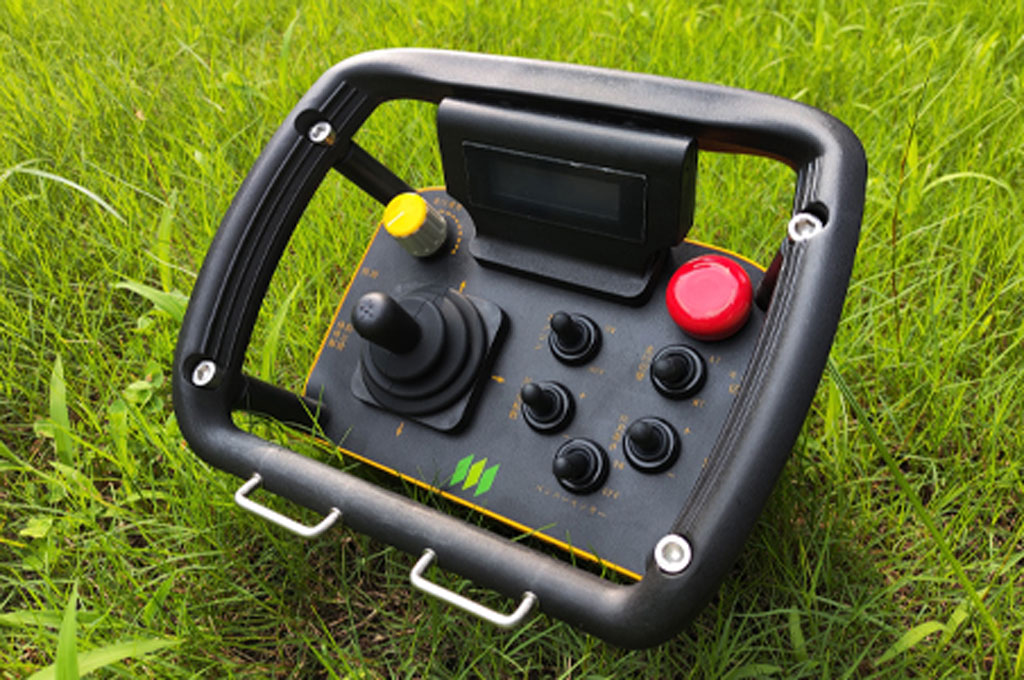
Remote control lawn mowers are often introduced as a convenient tool for homeowners. In reality, their true value becomes clear in high‑risk, hard‑to‑access environments—such as solar farms, slopes, embankments, and large industrial sites—where manual mowing is inefficient, unsafe, or simply impractical.
As a manufacturer focused on professional-grade and industrial mowing solutions, BotusMov works extensively with remote-controlled mowers deployed in photovoltaic power plants, uneven terrain, and semi‑wild grassland. This guide is written not as a generic buyer’s article, but as a field-based explanation of when remote control mowers work, when they don’t, and how to choose the right configuration.
What Is a Remote Control Lawn Mower (and What It Is Not)
A remote control lawn mower is not an autonomous robot and not a consumer toy. It is a manually operated, operator‑controlled machine designed to keep the user at a safe distance while maintaining full directional and cutting control.
In professional scenarios, remote control mowing is typically chosen for three reasons:
- Slope safety: keeping operators off steep or unstable ground
- Terrain complexity: gravel, ruts, uneven soil, or mixed vegetation
- Operational efficiency: covering large areas with consistent results
The BotusMov MC700 AIR is a remote-controlled lawn mower. Unlike the MC700 Std (which supports path planning and autonomous operation), a robotic lawn mower, a remote-controlled lawn mower relies on the operator’s real-time judgment, which is crucial in non-standard environments.
Where Remote Control Lawn Mowers Perform Best
Based on real deployment scenarios, remote control mowers show clear advantages in the following applications:
1. Sloped and Uneven Terrain
On slopes above 25–30 degrees, traditional push or ride‑on mowers become unsafe. Remote control mowers—especially tracked models—maintain traction while allowing the operator to stay on stable ground.
Practical note: wheeled mowers may lose grip on wet grass beyond certain angles, while tracked systems distribute weight more evenly and reduce slippage.
2. Solar Farms and Utility Sites
Photovoltaic plants require regular vegetation control without damaging cables, structures, or modules. The MC700 remote-controlled lawnmower, standing only 68 cm tall, can navigate under low-profile solar panels:
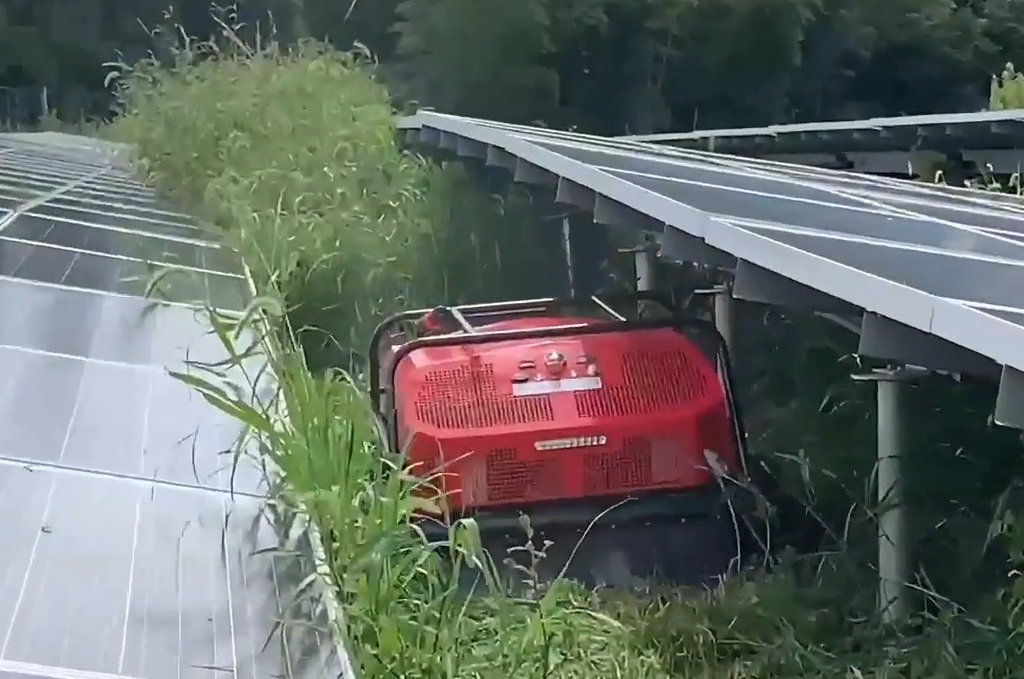
- Precise maneuvering between panel rows
- Reduced labor risk
- Consistent cutting height under variable terrain
3. Areas with Limited Access
Embankments, roadside verges, and fenced industrial zones often restrict human movement. The MC700 PLUS from BotusMov enables safe and precise mowing in areas where manual access is limited or restricted, thanks to its remote-controlled operation.
Why Remote Control Mowers Are Chosen Over Traditional Models
Reduced Operator Risk
Operating at a distance significantly lowers exposure to:
- Blade contact
- Roll‑over accidents
- Heat and vibration fatigue during long operations
Consistent Cutting Quality
Remote control allows deliberate, slow, and precise movement around obstacles—resulting in more uniform cutting compared to manual correction during push mowing.
Lower Long‑Term Labor Intensity
In professional environments, fatigue and injury risk directly impact operational cost. Remote control systems shift physical strain away from the operator while maintaining productivity.
How to Choose the Right Remote Control Lawn Mower
Selecting a remote control mower should be based on site conditions, not marketing descriptions. Key factors include:
1. Drive System: Tracked vs. Wheeled
- Tracked mowers: better for slopes, loose soil, wet grass, and uneven ground
- Wheeled mowers: suitable for flatter terrain with higher travel speed
2. Cutting Width and Deck Design
A wider deck improves efficiency on open land but reduces maneuverability between obstacles. For PV sites or complex layouts, moderate cutting width with reinforced deck protection is often more practical.
3. Power System and Battery Strategy
Battery runtime should match real working cycles, not laboratory conditions. In dense grass or incline work, actual runtime may be significantly shorter than rated values.
Field insight: interchangeable battery packs or hybrid solutions reduce downtime in commercial operations.
4. Remote Control Range and Signal Stability
In large or obstructed sites, signal reliability matters more than advertised range. Look for systems designed for industrial interference environments, not open residential lawns.
5. Cutting Height Adjustment
Frequent seasonal and terrain changes require flexible height adjustment. Remote or tool‑assisted adjustment improves efficiency during long workdays.
Maintenance Considerations in Professional Use
Remote control mowers used in industrial settings face harsher conditions than residential equipment.
Key maintenance priorities include:
- Blade inspection after high‑density or debris‑heavy mowing
- Undercarriage cleaning to prevent corrosion and overheating
- Drive system checks (especially tracks or drive motors)
- Battery and connector inspection for dust and moisture resistance
Proper storage in dry, covered areas significantly extends electronic component lifespan.
Maintenance Considerations in Professional Use
Remote control mowers used in industrial settings face harsher conditions than residential equipment.
Key maintenance priorities include:
- Blade inspection after high‑density or debris‑heavy mowing
- Undercarriage cleaning to prevent corrosion and overheating
- Drive system checks (especially tracks or drive motors)
- Battery and connector inspection for dust and moisture resistance
Proper storage in dry, covered areas significantly extends electronic component lifespan.
Remote Control vs. Traditional Lawn Mowers: A Practical Comparison
| Aspect | Remote Control Mowers | Traditional Mowers |
|---|---|---|
| Operator safety | High (distance operation) | Lower on slopes |
| Terrain adaptability | Strong (especially tracked) | Limited |
| Initial cost | Higher | Lower |
| Labor intensity | Lower | Higher |
| Suitability for PV / slopes | Excellent | Poor |
Traditional mowers remain suitable for flat residential lawns. Remote control systems are justified where risk, terrain, or scale make manual mowing inefficient.
Frequently Asked Questions (Field-Oriented)
At what slope angle do remote control mowers outperform manual mowing?
Typically above 20–25 degrees, where operator safety becomes a concern.
Are all remote control mowers suitable for solar farms?
No. Clearance height, deck protection, and maneuverability between panel rows are critical.
Do remote control mowers replace human operators?
No. They shift the operator’s role from physical labor to controlled supervision.
Conclusion
Remote control lawn mowers are not a universal replacement for traditional equipment. Their value lies in specific, demanding environments where safety, terrain adaptability, and consistent performance matter more than upfront cost.
When selected based on real operating conditions—not generic specifications—remote control mowers become a reliable tool for professional vegetation management in solar farms, slopes, and industrial landscapes.