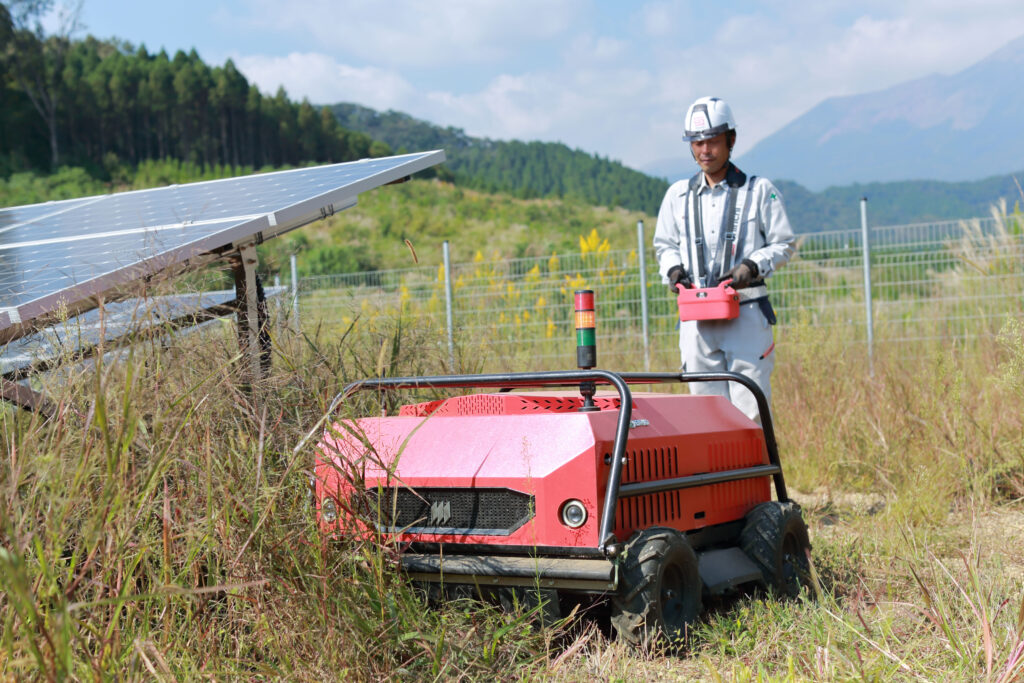
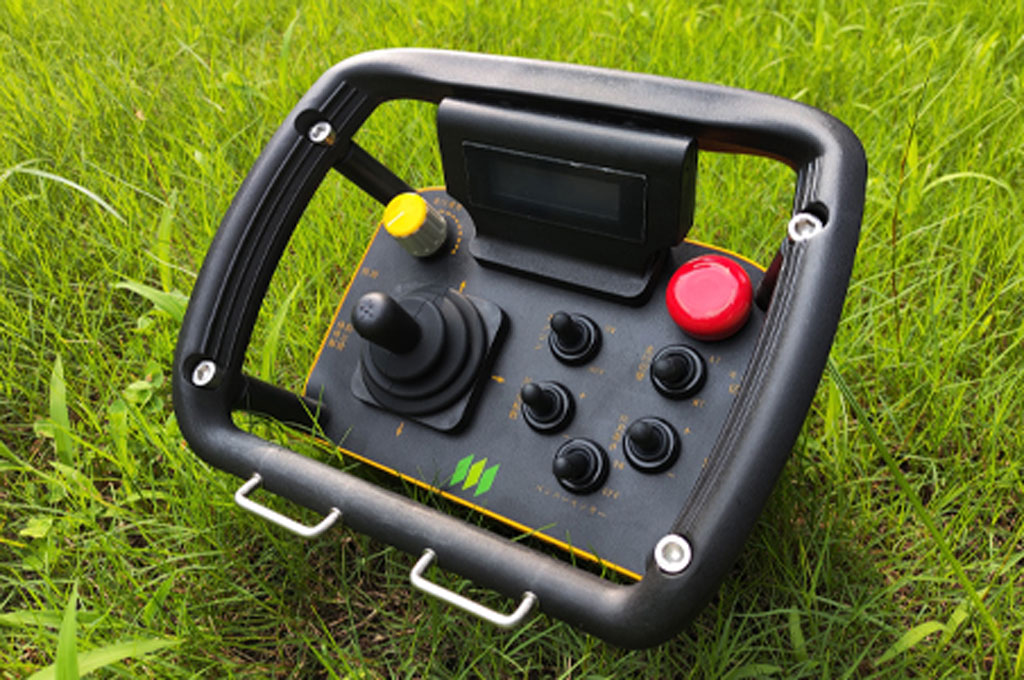
As solar PV farms continue to expand, maintenance challenges increase. Traditional manual weeding is labor-intensive and costly. Custom remote-controlled lawn mowers have become a preferred solution for many solar farm operators. Chinese manufacturers offer high-quality, cost-effective products, but design requirements vary significantly depending on terrain. Understanding these differences is essential for informed purchasing decisions.
1. Design Considerations for Flat and Slightly Sloped Terrain
Flat or gently sloping areas are common in most solar farms. In these environments, mowers are primarily designed for efficiency and coverage.
- Cutting Width: Wider mowers reduce the number of passes needed, improving overall efficiency.
- Wheels and Drive System: Standard tires usually suffice without requiring special anti-slip designs.
- Power System: Medium-powered motors provide stable operation with longer battery life.
- Remote Control Operation: Allows operators to manage mowing tasks safely from a distance.
Purchasers should focus on mower coverage efficiency, battery life, and blade durability.
2. Mid-Slope and Hilly Terrain
For steeper areas, stability is critical.
- Climbing Ability: Motors with higher torque are needed to handle slope loads.
- Anti-Slip Design: Tracks or crawler systems offer superior traction on slippery or soft surfaces.
- Low Center of Gravity: Reduces tipping risk and enhances safety.
- All-Terrain Engineering: Ensures consistent performance across varying slopes.
When importing, verify the mower’s stability and safety on different slopes.
3. Uneven and Rough Terrain
Solar farms may have areas with uneven ground or dense vegetation, requiring advanced features.
- Suspension System: Flexible suspension maintains even cutting on rough terrain.
- Obstacle Sensors: Help avoid collisions automatically.
- Adjustable Blades: Enable height adaptation to uneven surfaces without damaging cables or equipment.
- Robust Build Quality: Increases durability in rugged environments.
Purchasers should request videos or case studies demonstrating real-world performance in similar terrain.
4. Specialized Terrain: Sandy or Wet Areas
Some solar farms are located in sandy, wet, or high-grass regions, posing extra challenges:
- Water and Dust Resistance: The BotusMov MC700 Plus robotic lawn mower is designed with an IP65 protection rating, ensuring excellent water and dust resistance. This high IP-rated construction allows the machine to operate safely and efficiently even in wet, muddy, or dusty conditions, making it ideal for solar farms, uneven terrains, and outdoor environments exposed to the elements. With its robust casing and sealed components, the MC700 can handle rainy days, dew-covered grass, and dirt accumulation without compromising performance or longevity, providing a reliable mowing solution for year-round operation.
- Special Tires or Tracks: Improve traction and prevent sinking in soft ground.
- Heavy-Duty Wheels: Suitable for soft or muddy terrains.
- Corrosion-Resistant Materials: Ensure durability in wet or humid environments.
- Quiet Electric Operation: Reduces noise in sensitive areas.
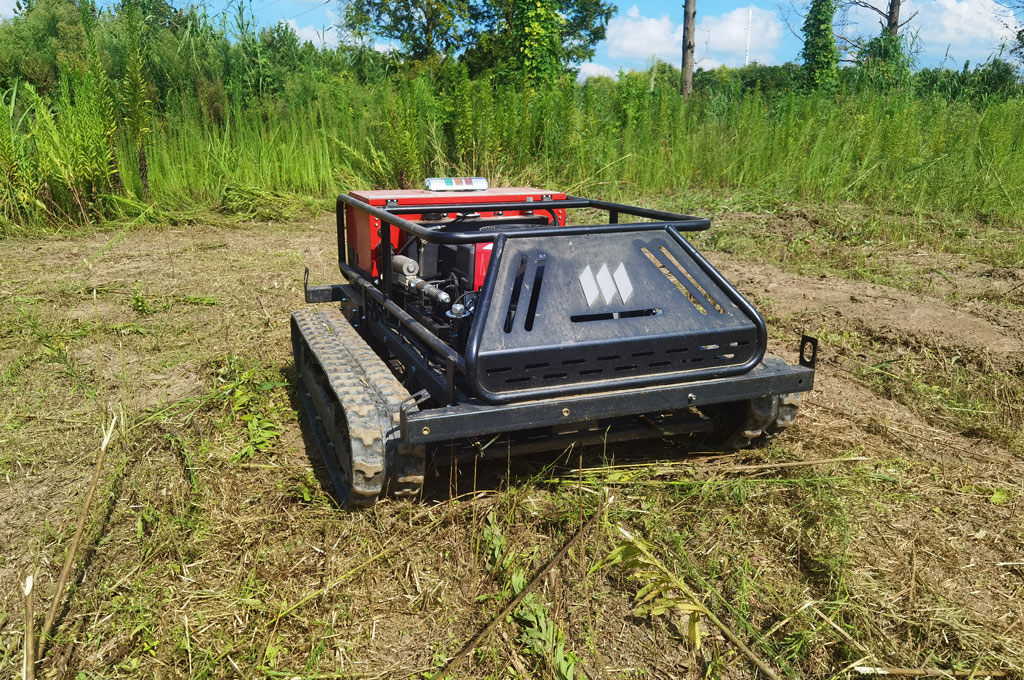
Focus on long-term durability, protection levels, and adaptability to challenging environments.
5. Customization and Advanced Features
- Customizable Features: Adapt the mower to specific environmental or operational needs.
- Remote-Control Convenience: Enhance safety and operational flexibility.
- Adjustable Cutting Heights: Provide versatility across various grass lengths and terrains.
6. How to Buy Chinese Custom Remote-Controlled Mowers
If you are planning to import custom remote-controlled mowers from China, follow this step-by-step guide to make an informed decision:
Step 1: Identify Your Terrain Needs
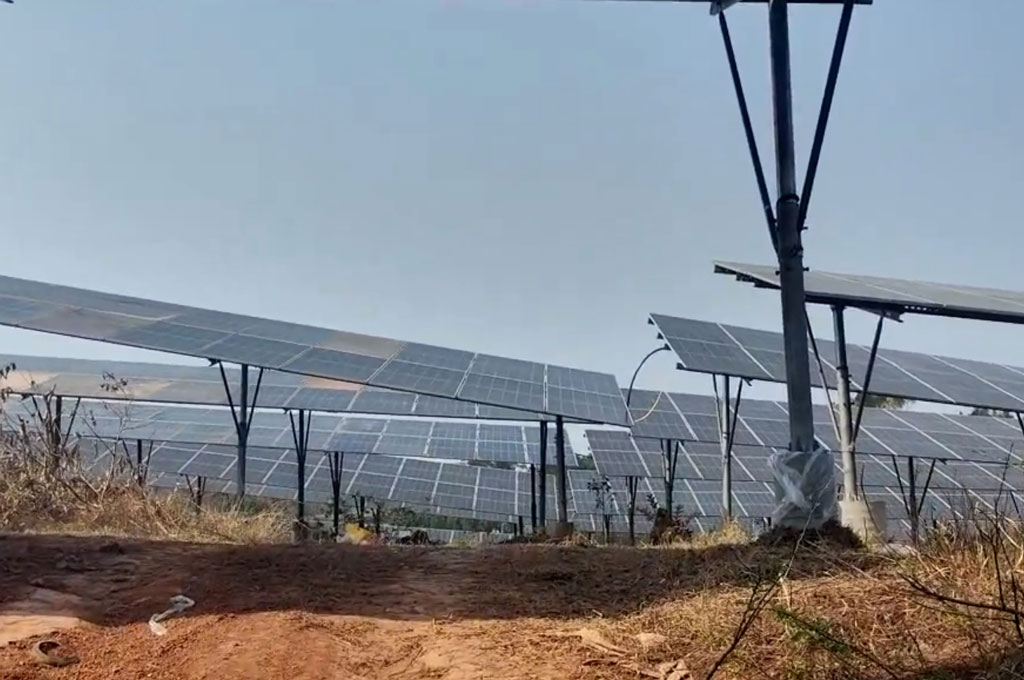
- Assess your solar farm’s terrain and determine whether it includes flat areas, slopes, or uneven ground.
- Choose a mower model and configuration that can handle the specific conditions effectively.
Step 2: Discuss Customization Options
- Contact manufacturers to confirm if the wheelbase, blades, suspension, or other components can be customized.
- Ensure the mower can be tailored to match your operational requirements.
Step 3: Evaluate Safety Features
- Verify the presence of anti-tip mechanisms, anti-slip wheels or tracks, and collision protection systems.
- Safety features are critical, especially for steep or uneven terrains.
Step 4: Balance Efficiency and Cost
- Compare different models based on operating efficiency, battery life, and maintenance requirements.
- Consider total cost including customization fees to select the most cost-effective option.
Step 5: Request Case Studies or Trial
- Ask manufacturers for videos, user feedback, or trial options on similar terrains.
- Real-world demonstrations help ensure the mower performs as expected.
Step 6: Make a Decision
Choose a mower that provides reliable, long-term operation tailored to your solar farm’s needs.
Proper selection and customization will not only improve weeding efficiency but also reduce maintenance costs.
Conclusion
Terrain significantly affects the design requirements for custom remote-controlled lawn mowers. Key considerations include stability on slopes, traction on soft or muddy surfaces, adjustable cutting heights, and robust build quality. Remote control, crawler systems, low center of gravity, and customizable features are critical for safe and efficient operation. When importing from China, buyers should understand these requirements and communicate closely with manufacturers to ensure the mower meets operational needs. Choosing the right product for your terrain maximizes efficiency, safety, and reliability in solar farm maintenance.